The Centre for Advancing Journalism (CAJ) exists to foster and encourage journalism that is useful to people in being informed and engaged citizens. For regular updates about CAJ events, projects and opportunities, subscribe to our newsletter
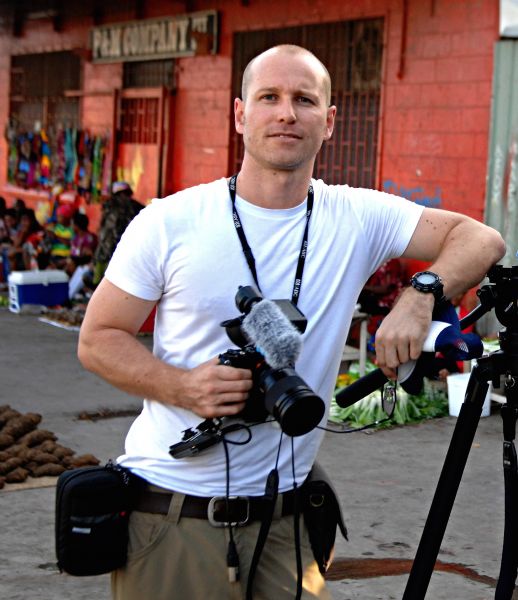
Journalism staff
At the Centre for Advancing Journalism, you'll study with academics and experienced media professionals with a breadth of industry and scholarly knowledge in areas including
- investigative reporting
- data journalism
- feature writing
- audio and video production
- media analysis
The Centre is guided by an expert advisory board.
Featured work
Academic staff within the Journalism program are regularly writing books, making films, producing podcasts and creating other journalistic work.
-
Indelible City: Dispossession and Defiance in Hong Kong
-
Upheaval: Disrupted lives in journalism
-
The Cave: The Inside Story of the Amazing Thai Cave Rescue
-
Crimes Against Nature: Capitalism and Global Heating
-
Journalism and the Future of Democracy
-
Climate justice in the Pacific
-
Islamic Republic of Australia
Featured research
Our research engages with a wide audience through industry and community partnerships, and is supported by a range of funding sources, including the Australian Research Council (ARC).
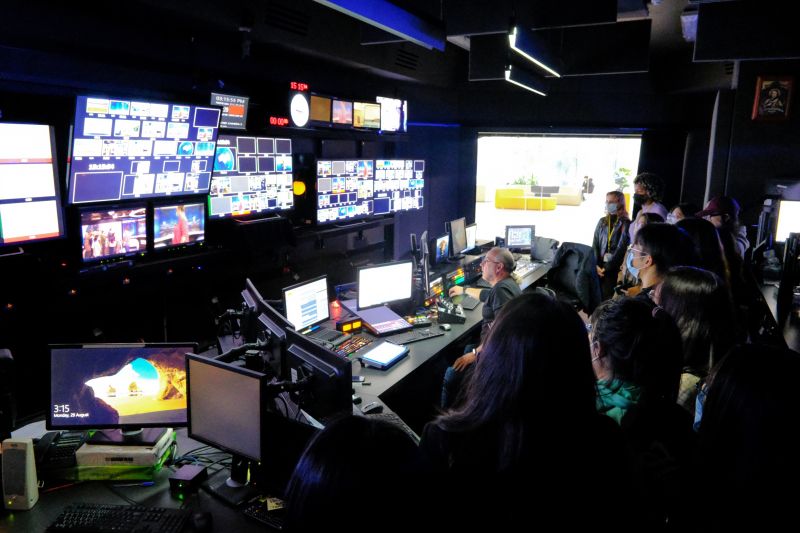
At the Centre for Advancing Journalism we are committed to teaching journalism that has the primary obligation of reporting truthfully, without fear or favour, and serving the public good. Journalism’s mission is to be a discipline of verification. It is a monitor on power and a vital means of ensuring citizens are informed and can participate fully in democratic decision making. We aim to foster an environment where students can learn how to cover news with rigour and accuracy and with a thorough understanding of the ethical and legal dimensions of the craft.
CAJ hosts the prestigious annual AN Smith Lecture in Journalism.
For regular updates on what’s happening at the Centre, subscribe to our e-news.
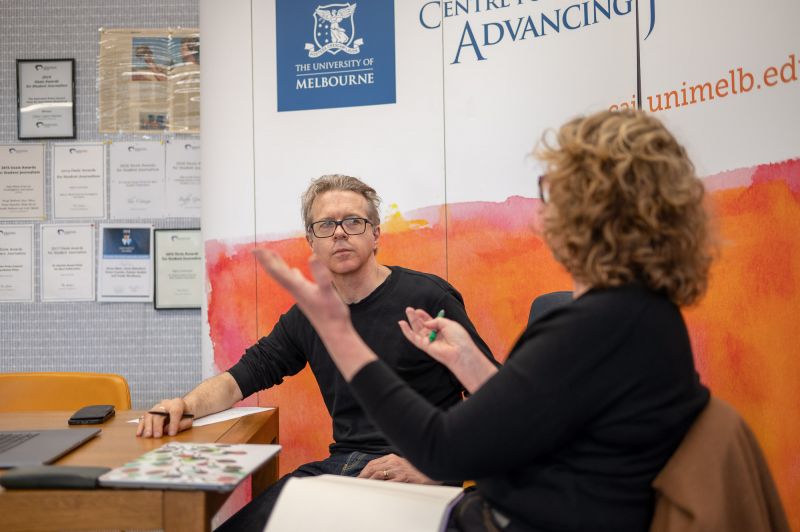
The staff at CAJ constantly evaluate what we teach. Student Experience Surveys and our rapidly changing industry influence the content of our program.
For more information on courses, see the Master of Journalism and Master of International Journalism web pages.
Students intending to enrol in Master of International Journalism can use My Course Planner.
Master of Journalism
Become a journalist of the future. The Master of Journalism degree builds the skills you need to redefine your profession and is designed and delivered by teaching staff who are outstanding professional practitioners. Gain a theoretical and practical grounding in issues such as civics, governance, citizenship, the impact of new technologies, social media and new practices, including data journalism. Investigate key concepts that frame recent developments in fields such as media law, management theory, globalisation, health policy, and climate change.
More information on our flagship degree is available on the Study Master of Journalism web page and the Handbook entry for this course.


Master of International Journalism
The Master of International Journalism is targeted at students interested in understanding and producing journalism in an international field of practice, where it is important that key skills are complemented by an understanding of different professional traditions, conventions, cultures and challenges.
The degree combines an emphasis on key skills – news gathering and news writing, video, audio, digital and social media production – with an international outlook on how different media operate in different cultures and markets.
More information on this degree is available on the Study Master of International Journalism web page and the Handbook entry for this course.
Sample course pathways
Please note, these are only suggestions. You can choose subjects from other pathways and also add electives from outside the Centre for Advancing Journalism.
Available in Semester 1 only | Available in Semester 2 only | |
Compulsory Subjects | Researching and Writing Stories | Researching and Writing Stories |
Key Skills | Key Skills | |
Interested in broadcasting? | Audio Journalism | Video Journalism |
Photojournalism | Photojournalism | |
New Media Storytelling | Podcasting | |
Journalism Internship/Law &Ethics | Journalism Internship/Project | |
Interested in writing? | Newsroom | Investigative Journalism |
Data Journalism (summer) | International Business Journalism | |
Advanced Non-Fiction | ||
Journalism Project | Journalism Project | |
Interested in ideas? | International Traditions | Change in Journalism |
Global Crisis Reporting | ||
Journalism Thesis | Journalism Thesis |
Graduate Diploma in Journalism (Advanced)
The Graduate Diploma in Journalism (Advanced) develops your advanced and practical understanding of how news stories are put together to ensure you can critically reflect on the challenges media professionals face in journalism.
The diploma is associated with the Master of Journalism and comprises four compulsory subjects and four related electives. Together these represent basic journalistic skills and understandings with the opportunity to study a limited number of subjects at a more advanced level. At the conclusion of their study students can choose to articulate into the full Master of Journalism program.
More information can be found on the Study Graduate Diploma in Journalism (Advanced) web page and the Handbook entry for this course.


Graduate Certificate in Journalism (Advanced)
The Graduate Certificate in Journalism (Advanced) refines your practical understanding of how news stories are put together and be equipped too critically reflect on writing challenges that journalists face across different media – print and digital.
The certificate is associated with the Master of Journalism and teaches the basic and fundamental skills and understandings of journalism. It is suitable for students with little or no experience in journalism. At the conclusion of their study students can choose to articulate into either the Graduate Diploma in Journalism (Advanced) or the full Master of Journalism program.
More information can be found on the Study Graduate Certificate in Journalism (Advanced) web page and the Handbook entry for this course.
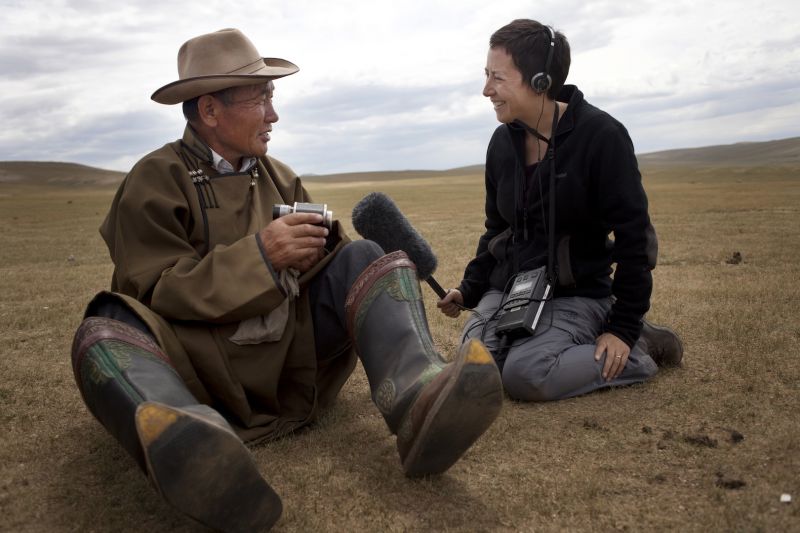
Significant applied outcomes are achieved by closely linking research to our program of public activities. Each project culminates in a workshop, seminar or other public presentation aimed at journalists, media executives and the broader community. This provides an opportunity for those working in the industry, and the interested public, to discuss the research findings and explore potential improvements in the way the media interacts with its community.
Contact
General enquiries
caj-info@unimelb.edu.au
Mailing address
Centre for Advancing Journalism
John Medley Building West Tower
School of Culture and Communication
The University of Melbourne
Victoria 3010 AUSTRALIA
Associate Professor Andrew Dodd
Centre for Advancing Journalism
Email: adodd@unimelb.edu.au
Master of Journalism and Master of International Journalism course enquiries
Email: arts-gradadmissions@unimelb.edu.au
Phone: 13 MELB (13 6352)
Website: Master of Journalism
Master of International Journalism
Location
School of Culture and Communications
Level 3, West tower, John Medley (Building 191)
The Faculty of Arts
The University of Melbourne
The Citizen
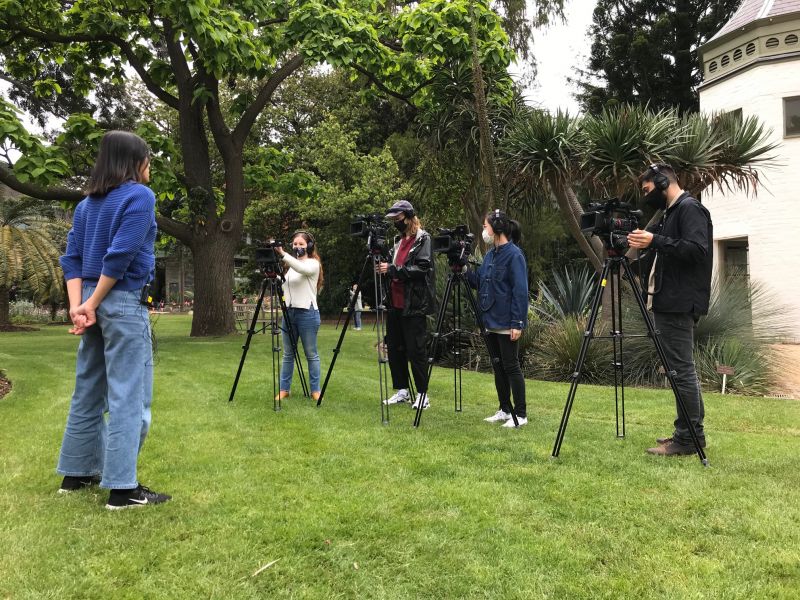
The Citizen is the flagship publication of the Centre for Advancing Journalism. It showcases the work of the students in the Master of Journalism and Master of International Journalism programs, giving them real-world experience in working for an industry standard, independent masthead. Stories in The Citizen are often co-published with The Age, Crikey, The Guardian and other major outlets. Many former Citizen journalists are now working professionally in the industry.
The Global Citizen
The Global Citizen is a new project, publishing stories with an international focus. It will provide an outlet for student work from the Centre for Advancing Journalism, with a focus on news, issues and controversies from all over the world.

The Yarn
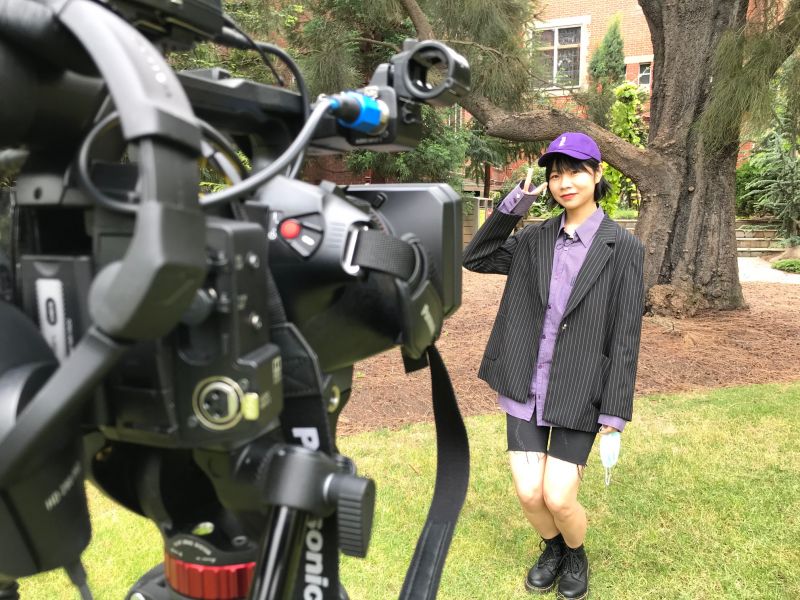
The Yarn is a podcast showcasing work from The Centre for Advancing Journalism at the University of Melbourne. It features original reporting by students, content from The Citizen publication, as well as talks and events held by the Centre.
Uncurated
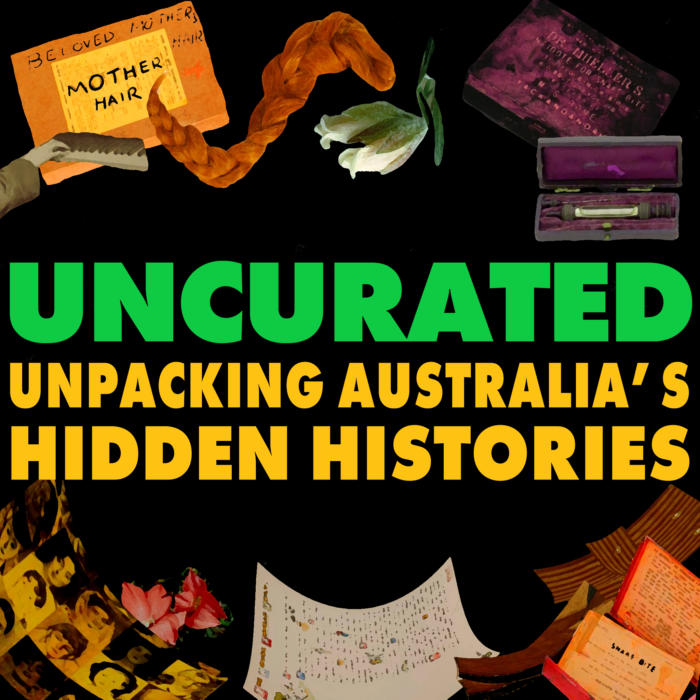
Hair from a corpse, killer antidotes and photos of the dead; these are some of the objects held in the University of Melbourne’s 12 museums. Uncurated breaks down the sandstone to unpack Australia’s hidden histories, exploring colonisation, fame, fortune, sex and death.